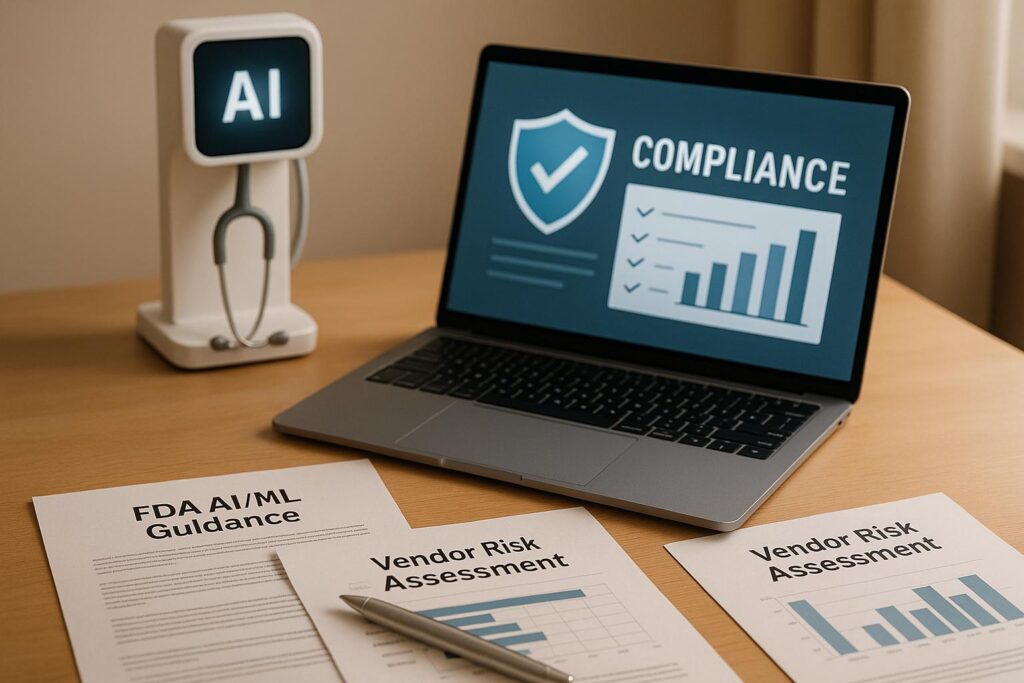
The life sciences industry is experiencing a historic transformation. Artificial intelligence, real-world data platforms, digital clinical trials, and automated manufacturing systems are redefining how therapies and medical products are developed and delivered. However, with this acceleration comes a sharp rise in regulatory scrutiny.
Today, success is no longer driven by innovation alone—it depends on trustworthy data, validated systems, and regulatory-aligned intelligence. Life sciences data compliance, FDA AI compliance, and regulations such as 21 CFR 1271 now sit at the center of product development, clinical operations, and commercialization strategies.
BioNetwork Consulting operates at this critical intersection, helping pharmaceutical, biotech, and medical device organizations adopt cutting-edge technologies while maintaining regulatory confidence in a highly regulated global environment.
Life Sciences Data Compliance: From Static Documentation to Living Systems
Traditionally, data compliance in life sciences focused on documentation, record retention, and audit trails. Today, the definition has expanded dramatically.
Modern organizations generate massive volumes of data across R&D, clinical trials, manufacturing, quality systems, and post-market surveillance. Cloud platforms, decentralized trials, and AI-driven analytics mean that data integrity must be designed into systems—not inspected after the fact.
Key Trends in Life Sciences Data Compliance
Data Integrity by Design
Regulators now expect compliance to be embedded at the system architecture level. This includes role-based access, automated audit trails, electronic signatures, and real-time monitoring aligned with ALCOA+ principles.Cloud and SaaS Validation
Cloud-based GxP systems are no longer optional—they are standard. Validation strategies have shifted toward risk-based CSV models that support continuous updates without compromising compliance.Interoperability and Traceability
With multiple systems exchanging data, traceability across platforms is critical. Regulators increasingly assess whether data can be traced from source to submission without loss of integrity.
BioNetwork Consulting supports organizations by designing scalable Computer System Validation (CSV) frameworks that ensure data remains reliable, secure, and inspection-ready throughout its lifecycle—regardless of system complexity.
FDA AI Compliance: Governing Intelligence, Not Just Software
Artificial intelligence is rapidly becoming embedded in life sciences workflows—from predictive analytics in clinical trials to automated image analysis, quality monitoring, and even decision support systems.
However, FDA AI compliance introduces new regulatory challenges. Unlike traditional software, AI systems evolve, learn, and adapt—making validation and compliance far more complex.
Emerging FDA Expectations Around AI
The FDA’s approach to AI emphasizes transparency, control, and accountability. Key areas of focus include:
Algorithm explainability: AI outputs must be interpretable, especially when influencing clinical or quality decisions.
Model governance: Clear version control, change management, and performance monitoring are essential.
Data bias and integrity: Training data must be representative, traceable, and validated to prevent unintended risks.
Organizations must now treat AI as a regulated system, not an experimental tool.
How BioNetwork Consulting Supports FDA AI Compliance
BioNetwork Consulting helps life sciences companies integrate AI responsibly by aligning AI-enabled systems with FDA expectations through:
Risk-based validation strategies for AI-driven GxP systems
AI governance frameworks integrated with quality management systems
Change control and lifecycle documentation for evolving algorithms
Data integrity controls supporting model training and deployment
By validating intelligence—not just infrastructure—BioNetwork Consulting enables organizations to harness AI’s power while maintaining regulatory trust.
21 CFR 1271: Modern Compliance for Human Cell and Tissue Products
21 CFR 1271 governs Human Cells, Tissues, and Cellular and Tissue-Based Products (HCT/Ps)—a rapidly growing segment driven by regenerative medicine, cell therapies, and advanced biologics.
As therapies become more complex, compliance with 21 CFR 1271 has expanded beyond donor eligibility and recordkeeping into digital traceability, quality systems, and validated manufacturing environments.
New Compliance Challenges Under 21 CFR 1271
End-to-end traceability from donor to recipient
Electronic records and signatures replacing paper-based systems
Validated laboratory and manufacturing systems supporting cell handling and storage
Global supply chain oversight for tissue sourcing and processing
Regulators increasingly expect companies to demonstrate system-level compliance, not just procedural adherence.
BioNetwork Consulting supports organizations navigating 21 CFR 1271 by aligning CSV, QMS, and clinical operations into a unified compliance strategy that supports innovation in regenerative medicine while reducing regulatory risk.
The Role of Advanced CSV in a Digital-First Regulatory Landscape
Computer System Validation has evolved from static documentation into a strategic enabler of compliance and speed.
Modern CSV is:
Risk-based rather than checklist-driven
Integrated with agile development and DevOps models
Designed for continuous compliance instead of one-time approval
BioNetwork Consulting specializes in next-generation CSV, supporting SaaS platforms, AI-enabled systems, electronic trial master files (eTMF), laboratory systems, and manufacturing execution systems (MES).
By aligning CSV with FDA, EMA, and global expectations, BioNetwork Consulting ensures organizations remain audit-ready while adopting modern technologies at scale.
Clinical Talent and Compliance: The Human Side of Regulation
Even the most advanced systems fail without the right expertise. As compliance requirements become more technical, organizations face a growing talent gap—particularly in validation, quality assurance, and clinical operations.
BioNetwork Consulting addresses this challenge through specialized clinical and regulatory recruitment, connecting organizations with professionals who understand both science and compliance.
From study startup specialists to post-market surveillance experts, BioNetwork Consulting ensures that compliance is supported not just by systems—but by people who know how to operate them in real-world environments.
Integrated Compliance: Where Technology, Talent, and Strategy Converge
The most successful life sciences organizations no longer treat compliance as a separate function. Instead, they integrate compliance into innovation strategies from day one.
This integrated approach includes:
Validated digital systems supporting real-time decision-making
AI governance aligned with regulatory expectations
Global compliance frameworks adaptable to regional requirements
Skilled professionals embedded across clinical and quality teams
BioNetwork Consulting operates as a strategic partner, not just a service provider—helping organizations build sustainable compliance ecosystems that scale with growth.
Looking Ahead: Compliance as a Competitive Advantage
As regulators continue to adapt to AI, digital trials, and advanced therapies, compliance will increasingly differentiate leaders from laggards.
Organizations that invest in data integrity, FDA-aligned AI governance, and proactive compliance with regulations like 21 CFR 1271 will move faster, reduce risk, and gain regulator confidence.
BioNetwork Consulting stands at the forefront of this transformation—helping life sciences companies turn regulatory complexity into strategic advantage.
Conclusion: Building the Future on Trust and Technology
The future of life sciences belongs to organizations that can innovate responsibly. Life sciences data compliance, FDA AI compliance, and 21 CFR 1271 are not obstacles—they are frameworks that protect patients, strengthen data credibility, and enable sustainable growth.
By combining advanced CSV expertise, regulatory intelligence, and specialized clinical talent, BioNetwork Consulting empowers organizations to innovate with confidence—delivering safer, smarter, and more compliant solutions to global markets.
In an era where technology evolves faster than regulation, having the right partner makes all the difference.